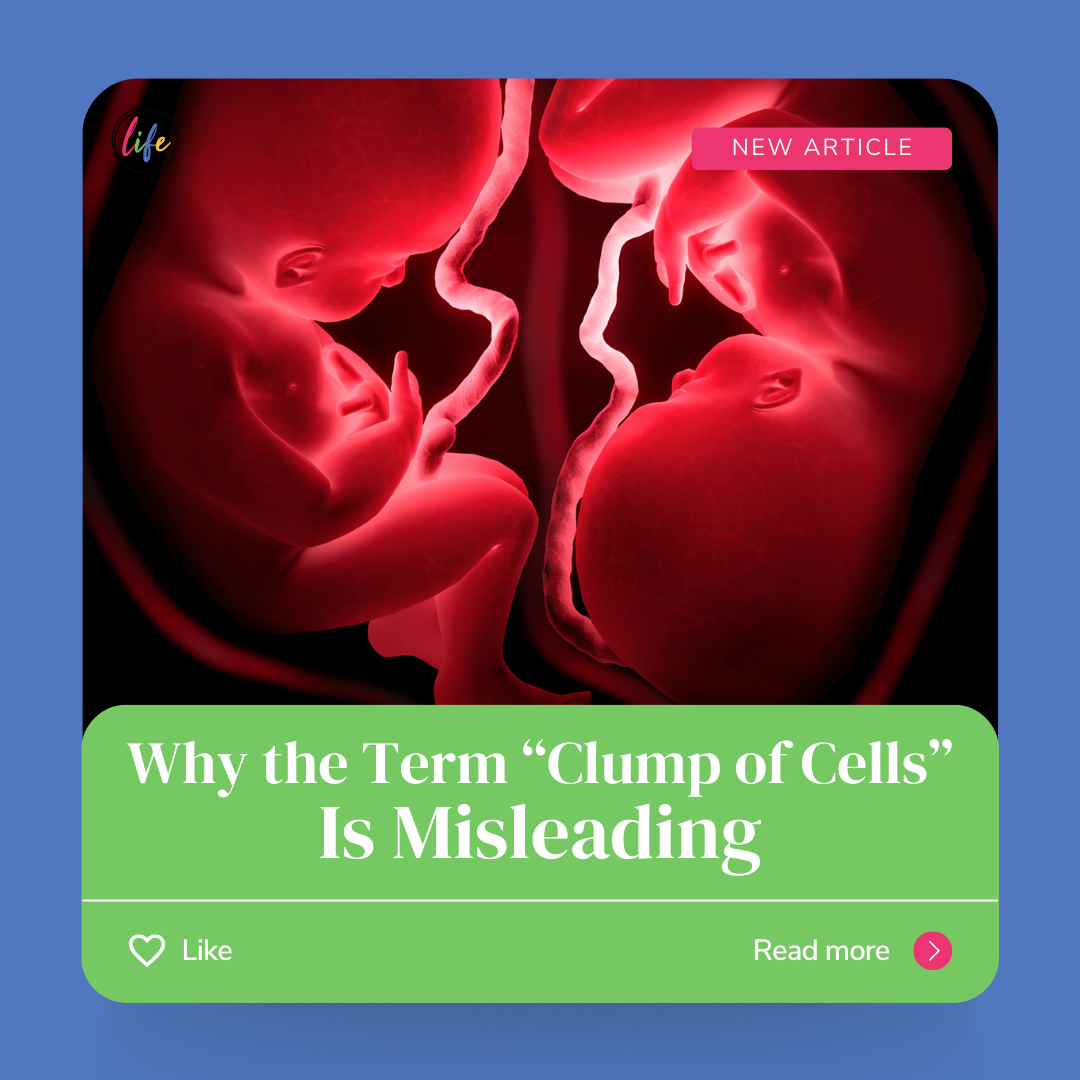
The phrase “clump of cells” is often used to minimize unborn life, but modern embryology shows this description is scientifically misleading. From the moment life begins at conception, the embryo functions as a coordinated, self-directing human organism—not an accidental collection of tissue. Developmental biology sources confirm that early development is structured, intentional, and continuous.
A Human Organism From the Start
The LSU Health Sciences Center’s Virtual Human Embryo project explains that fertilization results in the formation of a zygote—a new, genetically unique human organism that begins its own trajectory of growth. This medical atlas highlights that even at the one-cell stage, the embryo contains all the instructions necessary to develop as a unified human being. It is not a loose grouping of cells; it is a living whole at its first developmental moment.
StatPearls also notes that once fertilization occurs, development follows a coordinated and continuous process guided by the embryo’s own biological instructions. That level of organization cannot be accurately described as a “clump of cells.”
Developmental neurobiologist Dr. Maureen Condic reinforces this scientific reality, explaining that “the conclusion that human life begins at sperm–egg fusion is uncontested, objective, [and] based on the universally accepted scientific method…supported by thousands of independent, peer-reviewed publications.”
Organized Development Begins Immediately
Within days, the embryo begins forming a body plan through a tightly ordered sequence of developmental steps. The Carnegie Stages of Human Development—an internationally recognized scientific standard—document how the embryo progresses through 23 clearly defined stages based on identifiable structures, not vague masses of tissue. These changes include the formation of germ layers, neural folds, somites, and early organ primordia—evidence of an integrated organism actively shaping its own growth.
This organization continues as each stage merely builds on the one before it.
Why Accurate Language Matters
Every human—infant, child, teen, adult—is made of cells. What makes us living beings is not the presence of cells, but the organized, coordinated whole they form. Embryology consistently affirms that human development is continuous from fertilization onward, with the embryo functioning as the earliest stage of a growing human life.
Calling the embryo a “clump of cells” ignores this biological reality. It replaces scientific accuracy with rhetoric and minimizes the complexity, organization, and intentional design present from the very beginning. When we use accurate language, we acknowledge what biology already makes clear: the embryo is not merely a clump of cells, but a human being at its earliest and most vulnerable stage.
Learn more about the various stages of fetal development (conception, first, second, and third trimester) and don’t forget to follow us on social media (Facebook, Instagram, and TikTok).