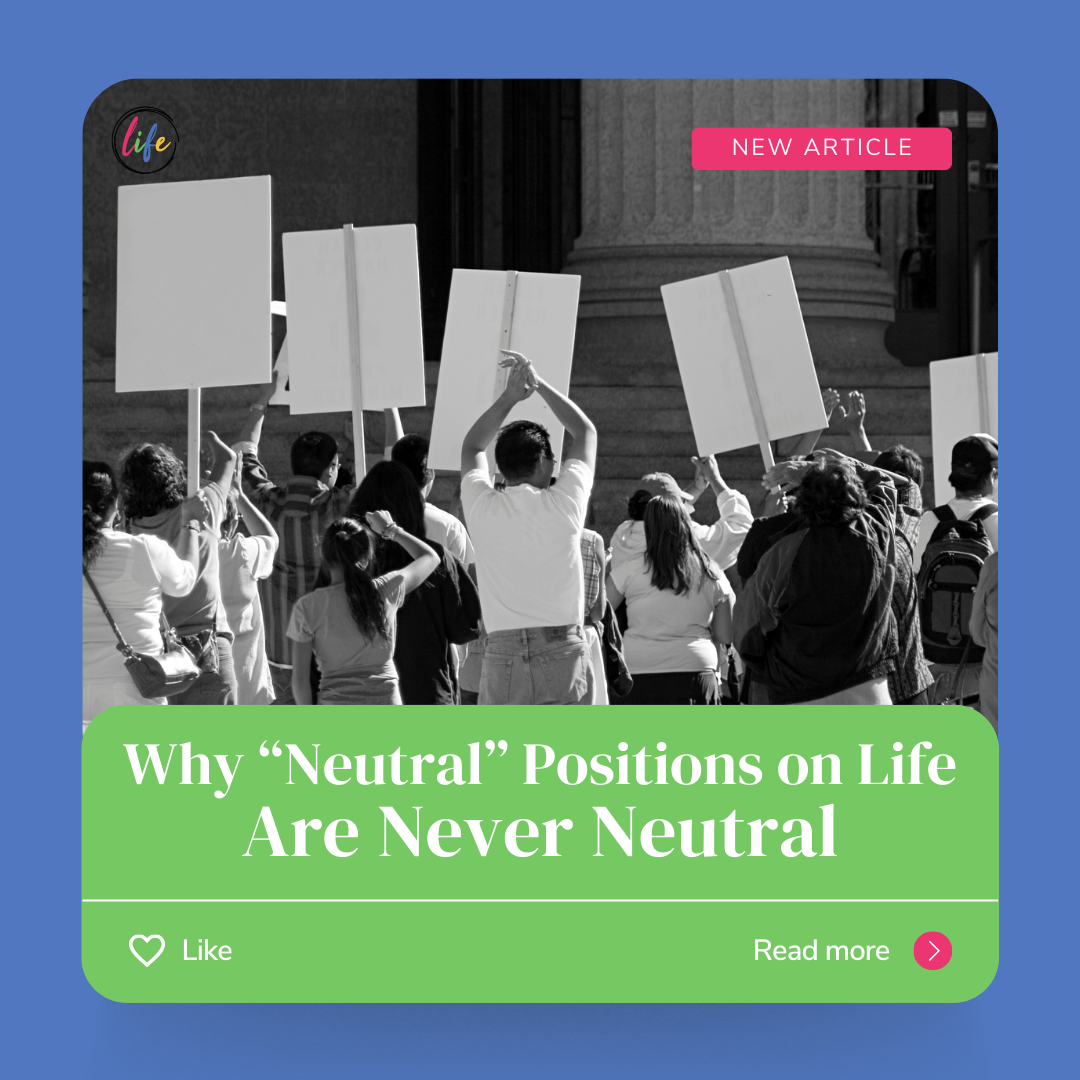
Neutrality is often presented as a balanced or non-influential stance, especially in discussions surrounding abortion and human value. Many people claim to hold neutral positions on life to avoid conflict or moral judgment. However, when life is at stake, neutrality does not pause outcomes. Neutral positions on life still shape laws, influence cultural norms, and affect real human lives.
Understanding why neutral positions on life are never neutral requires examining how neutrality functions in ethics, law, and real-world consequences.
Neutral Positions Do Not Remove Responsibility
In moral and legal debates, choosing not to take a position does not remove responsibility.
- “If you are neutral in situations of injustice, you have chosen the side of the oppressor.” — Archbishop Desmond Tutu, South African Anglican bishop and theologian, known for his work as an anti-apartheid and human rights activist
- “If I were to remain silent, I would be guilty of complicity.” — Albert Einstein
- “Not to speak is to speak; not to act is to act.” — Dietrich Bonhoeffer, Lutheran pastor who was hanged for opposing Hitler
Neutral Positions Have Consequences
Many people adopt neutral positions on life out of concern for women facing difficult or unexpected pregnancies. However, this stance overlooks the harm that abortion causes to women as well as the unborn. Research has documented mental and emotional challenges after abortion, including higher risks of anxiety and depression. These outcomes are often minimized or excluded from public discussion when neutral positions on life are adopted. Neutrality in policy can also fail to address the underlying pressures that lead women to consider abortion, such as financial hardship, lack of support, or fear of judgment.
Neutral positions on life allow existing legal frameworks to continue without challenge. In the case of abortion, this means continuing policies that permit the intentional ending of unborn human life and harm to women.
Neutral positions on life also influence culture. Language that minimizes or abstracts unborn life influences how society understands human value. Over time, neutrality contributes to the idea that human value is conditional—granted or denied based on shifting factors such as development, dependency, or circumstance.
Neutrality Ignores Science
Modern developmental science does not take a neutral stance on when each human life begins. Among scientists, when life begins is not up for debate. In a landmark study in 2019, Steve Jacobs “emailed surveys to professors in the biology departments of over 1,000 institutions around the world.” The results showed that the vast majority of biologists believe that life begins at conception. Jacobs wrote, “I found that 5,337 biologists (96%) affirmed that a human’s life begins at fertilization…”
Dr. Micheline Matthews-Roth, of Harvard University Medical School, expressed the connectiveness of science and public policy well.
“It is incorrect to say that biological data cannot be decisive…. It is scientifically correct to say that an individual human life begins at conception…. Our laws, one function of which is to help preserve the lives of our people, should be based on accurate scientific data.”
Neutrality on the issue of life and the value of each human life ignores science.
When it comes to questions of life and human value, silence is not neutral. Dr. Martin Luther King Jr. eloquently stated, “Our lives begin to end the day we become silent about things that matter.” Neutral positions on life still shape outcomes, influence policies, and affect real people. Will you stand by as others decide the value of life, or will you stand for life?
Learn more about the various stages of fetal development (conception, first, second, and third trimester) and don’t forget to follow us on social media (Facebook, Instagram, and TikTok).