
Abortion has long been discussed under the umbrella of “healthcare,” often without closely examining what that term means in medical practice. Choice proponents argue that abortion is an essential healthcare procedure, but healthcare is not a flexible label: it carries specific purposes, outcomes, and ethical standards rooted in medicine itself. To determine whether abortion fits within that framework, it is necessary to define healthcare clearly and examine how abortion functions in reality.
Defining “Healthcare”
The Merriam-Webster Dictionary defines healthcare as “efforts made to maintain, restore, or promote someone’s physical, mental, or emotional well-being, especially when performed by trained and licensed professionals.”
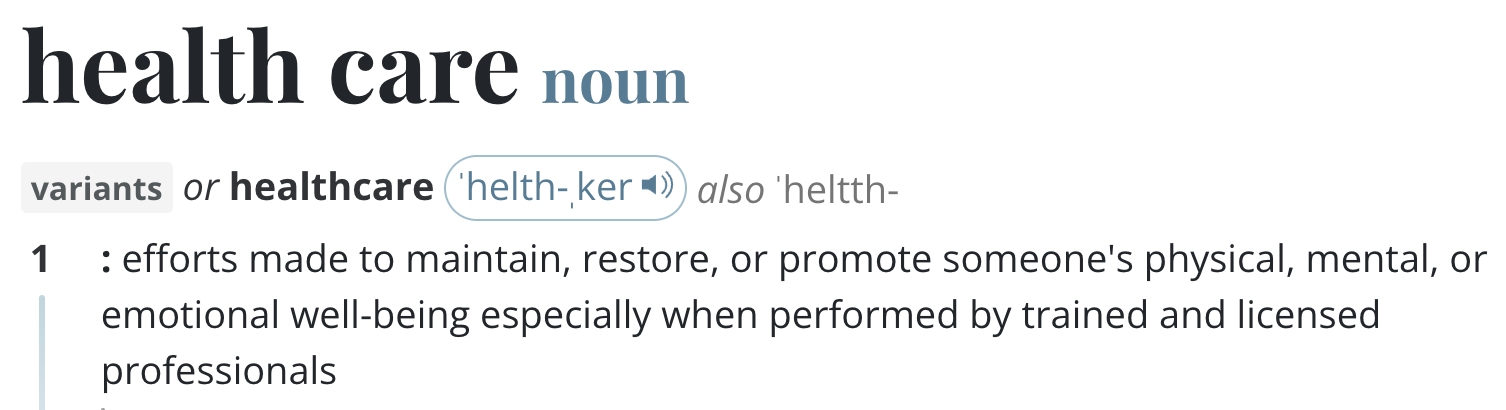
Whether abortion meets this definition depends on whether it maintains or restores health in the ways healthcare is typically understood and evaluated.
Physical Health & Abortion
Abortion is often described as healthcare on the basis that it protects a woman’s physical health. However, pregnancy itself is not a disease or pathological condition. Pregnancy is actually an indicator of reproductive health. It is a natural and temporary biological state that ordinarily does not require medical intervention.
In rare cases, pregnancy-related complications can pose serious risks to a woman’s life or major bodily functions. The Charlotte Lozier Institute reports that only 0.3% of abortions are performed due to life-threatening conditions, and 2.2% are related to physical health concerns. The vast majority of abortions (95.9%) are classified as elective or unspecified. In situations where a woman’s life is at risk, her life rightly takes precedence, and every pro-life law includes provisions allowing for necessary medical intervention.
Abortion itself carries documented physical risks. Complications can include excessive bleeding, infection, uterine or cervical injury, scarring, sepsis, uterine perforation, and, in rare cases, death.
A study carried out in Finland found that mortality rates following abortion were more than three times higher than those following childbirth. Similarly, a U.S. study by Dr. David Reardon linking Medicaid records with death certificates reported higher rates of death associated with abortion compared to childbirth.
The growing prevalence of chemical abortion has raised additional concerns. A study published in Annals of Internal Medicine in January 2023 by University of Toronto researchers Ning Liu and Joel G. Ray found that patients undergoing mifepristone–misoprostol abortions experienced higher rates of adverse events than those undergoing surgical abortions. The study reported that approximately 10.3% of chemical abortion patients visited an emergency room for complications or related concerns.
Mental/Emotional Health & Abortion
As awareness around mental health continues to grow, it has become a central focus of public healthcare. Choice advocates often argue that abortion is essential to protecting women’s mental health.
This argument is frequently framed around the belief that carrying an unintended or unwanted pregnancy to term — or parenting before one feels emotionally prepared — would inevitably cause or worsen mental health struggles. However, research does not support the claim that abortion maintains or restores women’s emotional well-being.
Instead, research indicates that emotional distress, regret, and coercion are not uncommon experiences. Women Who Suffered Emotionally from Abortion: A Qualitative Synthesis of Their Experiences, published in the Journal of American Physicians and Surgeons, reported that 58.3% of participants said they aborted to make others happy, 73.8% indicated their decision was not entirely free from subtle pressure, and 28.4% cited fear of losing a partner as a motivating factor.
A large-scale retrospective study published in Psychological Medicine analyzed more than 1.2 million pregnancies in Quebec, Canada, including 28,721 induced abortions and 1,228,807 births between 2006 and 2022. The study found higher rates of mental health–related hospitalization following induced abortion compared to other pregnancy outcomes, along with increased risks of substance use disorders and suicide attempts.
Is Abortion Healthcare? What Medicine Actually Says
When healthcare is defined by its purpose — to maintain health, restore function, and promote well-being — abortion does not meet those criteria. It presents documented physical and mental health risks and involves the deliberate ending of unborn human life. Except in extremely rare medical circumstances, abortion does not function as a therapeutic intervention for either patient.
If we truly care about women’s physical and mental health, as well as the lives of the unborn, our focus should be on providing compassionate support, practical resources, and life-affirming care for those facing difficult pregnancies.
Learn more about the various stages of fetal development (conception, first, second, and third trimester) and don’t forget to follow us on social media (Facebook, Instagram, and TikTok).