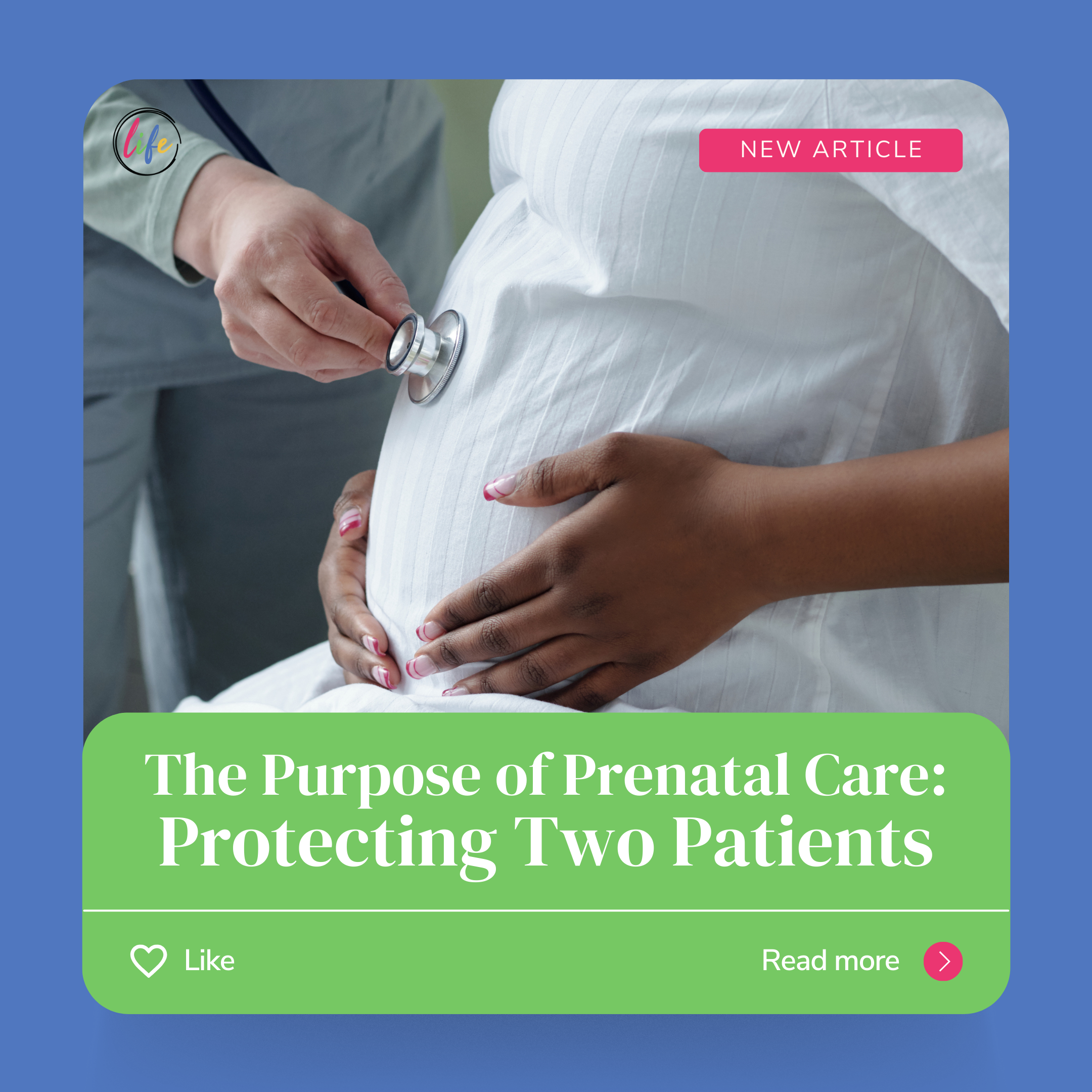
Prenatal care exists for a simple but profound reason: pregnancy involves two patients. From the earliest weeks, modern medicine recognizes both the mother and her unborn child as deserving care and protection. Through consistent monitoring and early screening, prenatal care safeguards maternal health while supporting the baby’s growth and development before birth.
What Prenatal Care Is Designed to Do
Prenatal care begins as soon as pregnancy is confirmed and continues through delivery. Its purpose is to promote healthy outcomes for both the mother and her developing child by allowing healthcare providers to monitor health, identify risks, and intervene early when concerns arise.
For mothers, prenatal care includes monitoring blood pressure, weight, nutrition, and overall well-being. For the unborn child, it includes tracking heartbeat, growth, movement, and development. According to the American College of Obstetricians and Gynecologists (ACOG), prenatal visits are essential for identifying potential complications early and supporting the health of both patients.
This dual focus reflects how obstetric medicine operates in practice. Treatments, screenings, and medical decisions during pregnancy are chosen to protect maternal health while supporting the life and development of the unborn child through tools such as ultrasounds and fetal monitoring. Fetal surgery has emerged as a growing option for the treatment of congenital anomalies that once had severe or lethal outcomes if left untreated until birth. Conditions such as spina bifida, urinary tract obstruction, congenital hernias, congenital lung malformations, twin–twin transfusion syndrome, etc. have shown improved prognosis after in utero intervention. Stem cell transplantation and in utero gene therapy are new developing interventions.
The Human Impact of Prenatal Care
Beyond statistics, prenatal care has a tangible impact on real families. In a firsthand testimony shared through Healthy Pregnancy Hub, one mother reflected on navigating pregnancy complications and emphasized the importance of attentive medical care. Describing the support she received, she shared, “My doctor was extraordinary—a highly experienced woman who understood not just my medical needs but also my fears… That made a big difference in how I managed my pregnancies.” Her experience highlights how open communication and consistent care can shape outcomes for both mother and baby.
In a qualitative study examining midwives’ experiences of antenatal care, providers described continuity of prenatal care as essential for building trust with pregnant women, identifying concerns early, and supporting healthy pregnancies. Midwives emphasized that ongoing relationships during pregnancy allow them to better monitor both maternal well-being and the baby’s development over time.
Research supports these lived experiences. According to MedlinePlus, a service of the National Library of Medicine, early and consistent prenatal care reduces the risk of serious pregnancy complications for moms while improving outcomes for babies, including lowering the likelihood of preterm birth and low birth weight.
Supporting Life Through Comprehensive Care
At its core, prenatal care reflects a life-affirming principle: both mother and child deserve compassion, dignity, and protection. Supporting a healthy pregnancy means caring for both patients together—a responsibility medicine upholds long before birth through consistent prenatal care.
Learn more about the various stages of fetal development (conception, first, second, and third trimester) and don’t forget to follow us on social media (Facebook, Instagram, and TikTok).