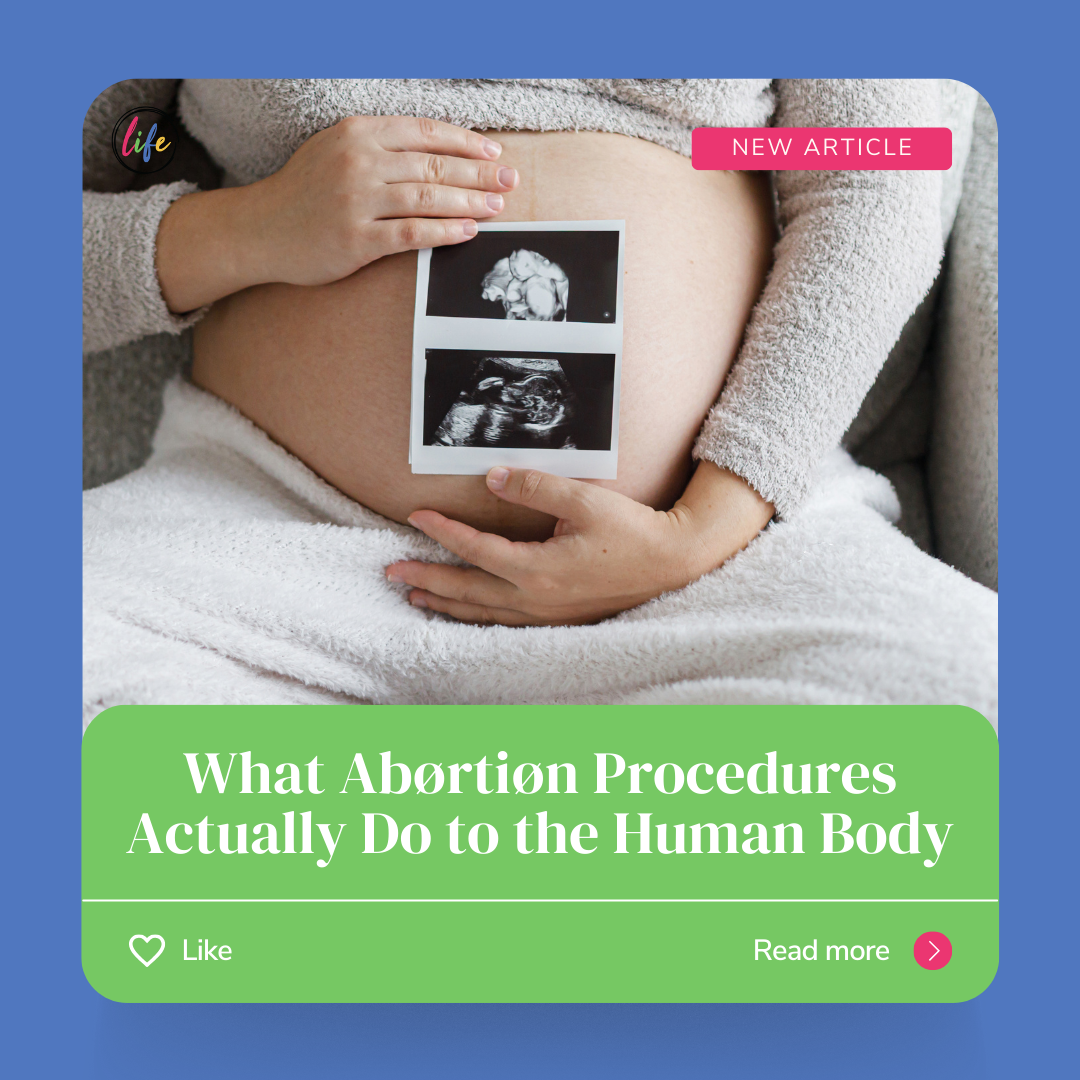
In the middle of the abortion debate, it’s easy to lose sight of the actual procedure. Political and philosophical views can turn abortion into an abstract idea. However, these are real medical procedures that directly affect two human bodies: the mother and her developing child.
Understanding what abortion procedures involve physically and how they impact both the baby and the woman can clarify a conversation that is often simplified to a slogan.
Early Abortion Procedures (Medication Abortion)
Medication abortion typically involves two drugs: mifepristone and misoprostol. According to the U.S. Food and Drug Administration (FDA), mifepristone blocks progesterone, the hormone necessary to sustain pregnancy. Misoprostol then causes uterine contractions to expel the embryo or fetus. The FDA has approved mifepristone and misoprostol for use through 10 weeks gestation (8 weeks following conception).
By the time a woman realizes that she is pregnant and considers taking the abortion pill, the fetus already has heart and brain activity. Around the 21st day after conception, cardiac activity begins and can be detected by ultrasound at around 6 weeks. Fetal brain development also begins at around 3 weeks post conception with the formation of the neural tube. The brain and nervous system develop rapidly, with initial electrical activity starting around week 6. By the 8th week following conception (10 weeks gestation) all major organs are functioning. The fetus can swallow, produce urine, kick, stretch, yawn, and bring hands to its face. If it’s a boy, he is already producing testosterone. When mifepristone cuts off the progesterone, it essentially stops the fetus’s nourishment. Like any other human without nourishment, the fetus dies.
For the woman undergoing the procedure, this process typically involves significant cramping and bleeding that can last hours or even days. The FDA lists possible side effects, including heavy bleeding, nausea, fever, chills, infection, and, in some cases, hemorrhage or retained tissue requiring further medical care.
While interpretations differ, these findings reinforce the importance of informed consent and full transparency about both immediate and potential long-term effects on a woman’s health.
Surgical Abortion Procedures
Surgical abortion procedures vary depending on gestational age. Early procedures typically use suction (vacuum aspiration). Later procedures, generally use dilation and evacuation (D&E).
About 93% of surgical abortions occur within the first 12 weeks post conception (14 weeks gestation) and are done by vacuum aspiration. Although the fetus has a heart, brain, and many functions in place, the bones are not developed. Thus, the body can be vacuumed and dismembered via the cannula, a plastic tube which is inserted through the cervix into the uterus during vacuum aspiration.
For second and third trimester abortions, the procedure typically involves a multi-day Dilation & Evacuation (D&E). The cervix is dilated using medication and/or laminaria over 1–2 days. On the procedure day, forceps and suction are used to dismember the fetus’s body via ultrasound guidance and then remove the parts.
For the woman, the surgical procedures involve cervical dilation and instrumentation inside the uterus. Documented complications can include infection, cervical injury, uterine perforation, or hemorrhage. Though considered uncommon, these risks are inherent to invasive procedures. Medical studies have also raised concerns regarding pre-term births following a prior abortion, which bring greater risk to the mom and future babies.
Even if not every woman has experienced severe complications, acknowledging the very real risks of abortion is part of honest medical disclosure.
Emotional and Psychological Impact
Beyond physical effects, abortion can also carry psychological weight. Women’s emotional responses vary widely. Some might report relief. Many report grief, regret, anxiety, or depression, sometimes immediately, sometimes years later. Peer-reviewed research has explored associations between abortion and mental health outcomes. Interpretations differ across studies, but it is clear that abortion can be a significant life event with lasting emotional impact for some women.
In the cases where an abortion attempt results in a live birth, the Born-Alive Infants Protection Act of 2002 affirms that the child is legally recognized as a person entitled to medical care. While uncommon, such cases underscore a biological reality: abortion procedures act directly upon a living human being at a specific stage of development. For women, confronting the physical and emotional reality of what occurred can intensify psychological distress. For survivors of attempted abortion, lifelong medical or physical challenges can follow.
Why Clarity Matters
Abortion procedures end the life of a developing human being. They involve direct physical effects on a woman’s body and may carry emotional and long-term consequences.
Honest conversations require medical clarity, not abstraction. Women deserve full information. Unborn children deserve recognition. And discussions about life should be grounded in documented fact.
Learn more about the various stages of fetal development (conception, first, second, and third trimester) and don’t forget to follow us on social media (Facebook, Instagram, and TikTok).