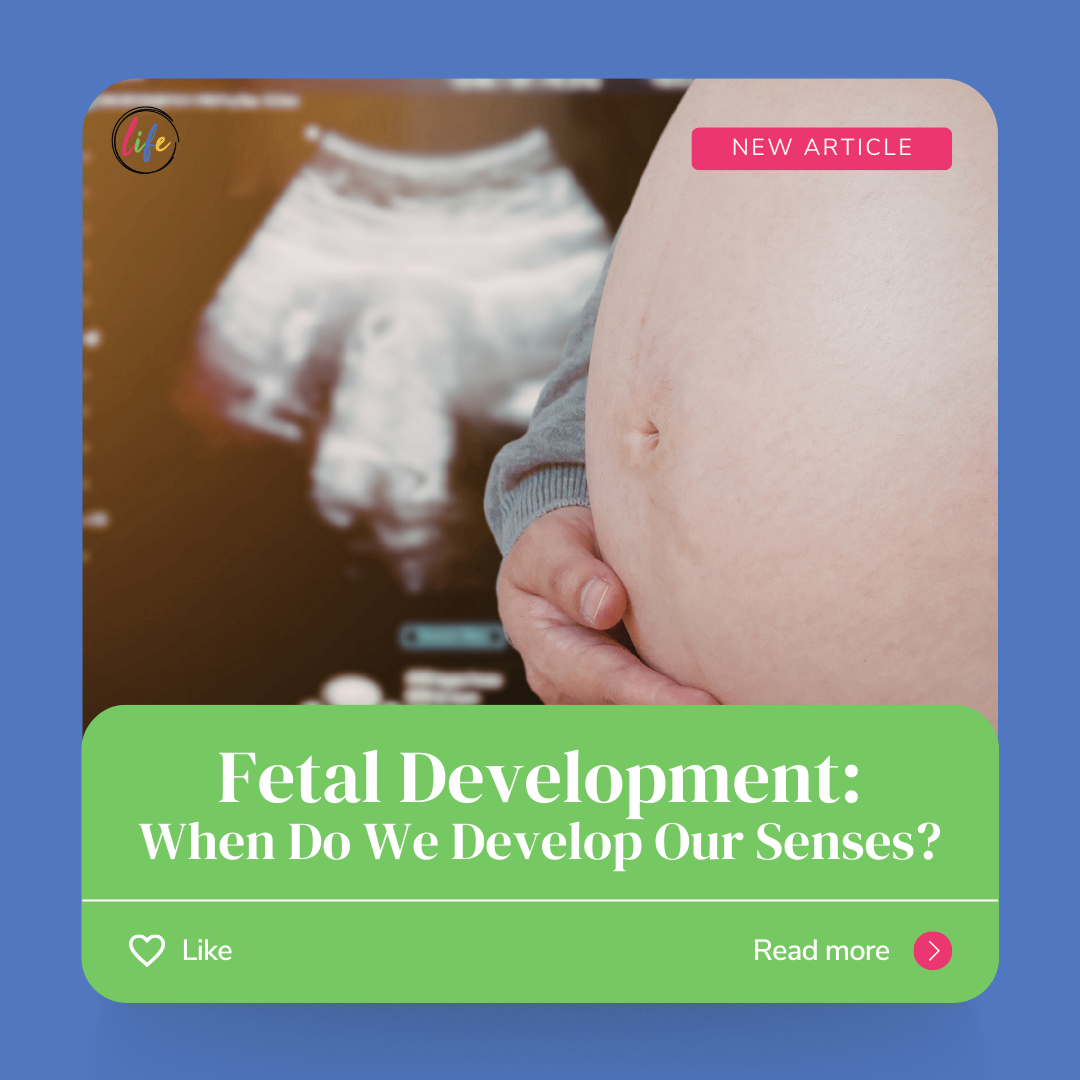
From the earliest stages of fetal development, a new and distinct human life is growing. Long before birth, this developing baby is forming organs, building neural connections, and beginning to experience the world in measurable ways.
Science confirms what embryology has long shown: life in the womb is active, responsive, and continuously developing. One of the clearest examples of this is the formation of the senses.
Touch: The First Sense to Appear in Fetal Development
Touch is the first sense that develops during pregnancy. According to The Endowment for Human Development, sensitivity to touch starts around 7 to 8 weeks of gestation. It begins near the mouth and gradually spreads to other areas of the body.
Touch is essential to human experience. It is the first way a baby starts interacting with their environment in the womb. The ability to respond to contact shows that this developing child is not just tissue; they are a growing human with measurable neurological function. Even though the unborn cannot verbally express discomfort or pain, early sensory development reveals that biological responsiveness begins well before birth.
Understanding that the sense of touch begins early in fetal development helps us recognize the vulnerability of a child who cannot yet speak for themselves.
Hearing: Recognizing Voices Before Birth
Our hearing is another one of the senses to develop throughout our life in the womb. As early as 18 weeks of pregnancy, ear structures start to form, and by 20 weeks, babies are able to detect sound.
By the 28-week mark, the baby begins to recognize sounds, especially their mother’s voice, setting the stage for later learning of language and more advanced sound recognition. This continuity in our development serves as a reminder that birth is a continuation of life rather than its beginning.
Taste and Smell: Recognizing Before Delivery
Around 8 weeks, taste buds begin to form, and by 14 weeks, babies can discern taste. According to research, a mother’s diet affects how that fluid tastes. Babies have been shown to swallow more when they are exposed to sweeter flavors and less when they are exposed to bitter ones. These are visible responses from a growing human being.
Additionally, the baby’s sense of smell begins to develop before birth, enabling them to identify familiar scents right away following delivery, particularly their mother’s scent.
Sight: Sensitivity to Light
Babies start to develop the optical system early in pregnancy at the 6-week mark. The main parts of the eye will continue to develop during the first trimester. When we hit 27 weeks, their eyes first open. Light sensitivity comes into play at 31 weeks, where we can observe them blinking or even wiggling in response to bright light.
These early responses show functional neural pathways and responsiveness within the womb, even though vision continues to develop after birth.
What Fetal Development Reveals
The process of fetal development is not abstract. It is observable, quantifiable, and unquestionably human.
A baby’s brain develops connections, their body reacts to touch, sound, taste, and light, and their heart begins to beat in the first few weeks of life. These turning points are not arbitrary; rather, they are a part of a human life’s ongoing development, which starts at conception and continues after birth.
One thing becomes evident when one understands fetal development: life in the womb is more than just potential. It is the early and active beginning of a distinct human life already in progress.
Learn more about the various stages of fetal development (conception, first, second, and third trimester) and don’t forget to follow us on social media (Facebook, Instagram, and TikTok).